
Lydia T.
• 5 min read
Summertime Flying
In This Article
As the temperatures rise, it’s good to remind all student pilots and airplane renters about essential aircraft policies and procedures to ensure safe and efficient flying in the heat. Here are Policies and Procedures for summer flying we employ at our Las Vegas Flight School.
Fuel Management
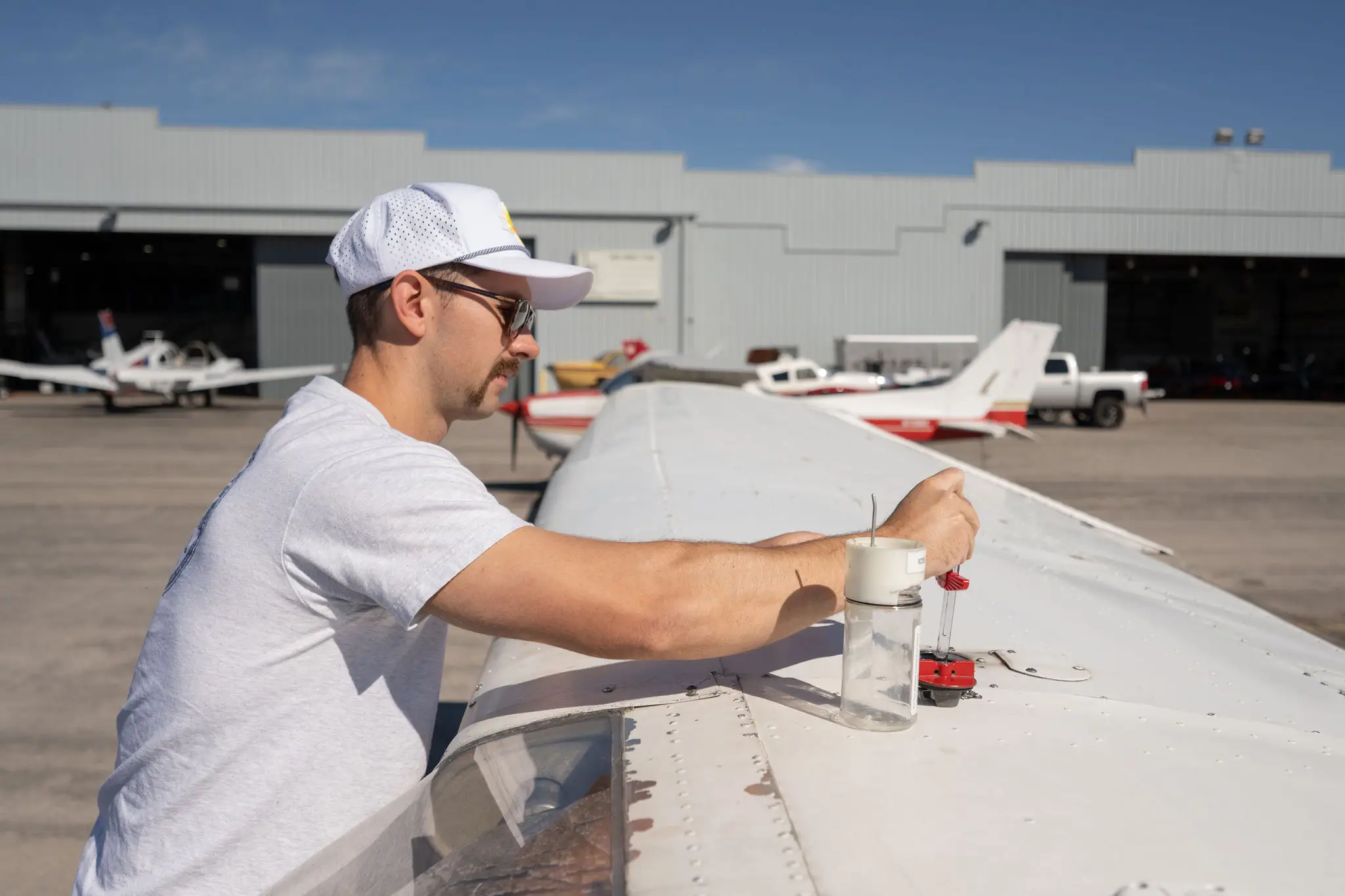
After each flight, fill C-172 tanks to 15 gallons per side (30 gallons total) before parking. This practice allows the next renter/student to keep the aircraft within Weight & Balance (W+B) and performance limitations due to density altitude.
Engine Temperature Management
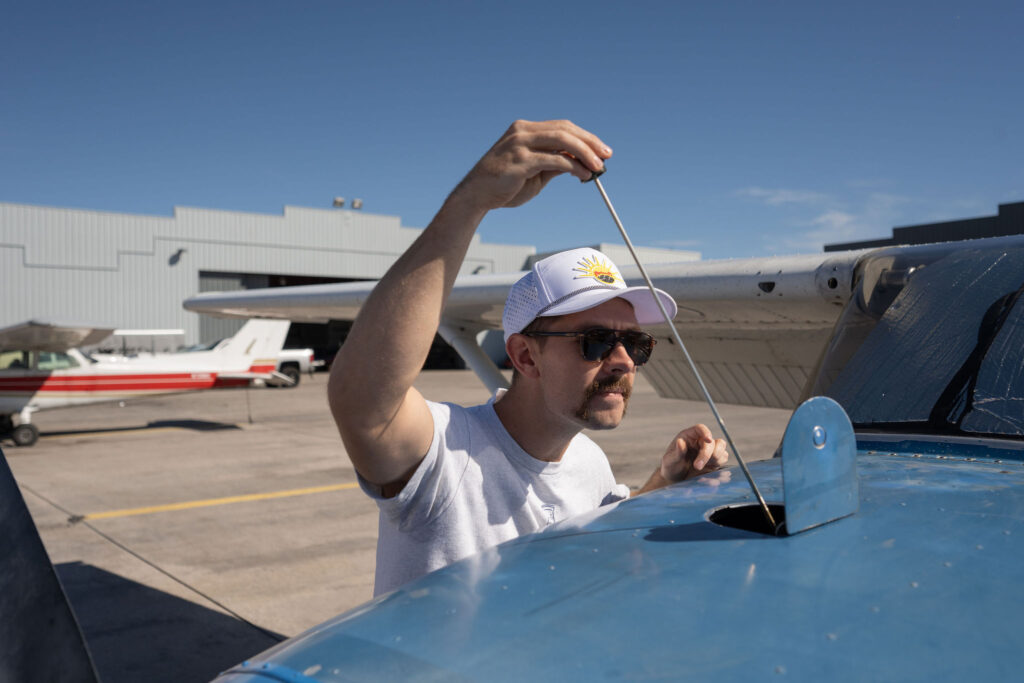
- On hot summer days, before each flight, ensure that aircraft have adequate oil to the summertime minimum of 5 quarts.
- Run the mixture richer richer than usual in the air – two extra turns in on the mixture control.
- Use cruise climbs which lowers the aircraft attitude to ensure adequate airflow (80 KIAS in the climb).
Tire and Brake Checks
- Tires can experience accelerated wear during the hot summer months. Before each flight, verify that tires do not have excessive wear, flat spots, or chord showing.
- Check that brake pads and discs are not excessively worn. If in doubt, always ask an instructor or mechanic for assistance.
Practice Area Traffic Awareness
- In high density altitude areas, training flights tend to be grouped during the “cooler times” in the early mornings or late afternoons. This can create a situation where traffic patterns and practice areas have much higher density of aircraft than usual. Traffic awareness and avoidance is critical!
- As of January 2, 2020, the FAA required all aircraft operating in controlled airspace be equipped with ADSB-OUT. For added safety, at our flight school we added ADSB-IN for traffic awareness and live weather graphics in all of our aircraft. Utilization of ADSB-IN for traffic awareness is a requirement for all Vegas Aviation rental and Instructional flights.
- A Sentry ADS-B In receiver is available to check out at the front desk at our Flight School. The Sentry allows traffic monitoring/awareness and live weather on your I-pad. Ask a CFI or reach out to our Chief CFI if you need assistance setting up the Sentry.
Other Practices Year-round
Aircraft Movement
- Always use towbars provided in each aircraft for all ground movements before engine start or after shut-down.
- Do not maneuver aircraft by pushing on the horizontal stabilizers. If a towbar is missing, enter a squawk in the flight school’s Flight Scheduling program and inform the Flight School’s Administration.
Flight Scheduling Software
- Flight Scheduling software is crucial for any Flight School’s Operations. Students, Renters and Certified Flight Instructors (CFIs) must properly check aircraft out before flights and check in after flights per school policy.
- Most quality flight schools will have a Flight School software program. We use Flight Schedule Pro.
- Be sure to research squawks and verify time remaining before required maintenance when you check out your scheduled aircraft. Enter any new squawks and pay your bill immediately after flights and lessons utilizing Flight Schedule Pro.
Everyone’s cooperation in following Flight School Policies and Practices is not only appreciated, it is essential to creating the safest flying environment for all.
“The Sky is Not the Limit. It’s Only the Beginning…”